
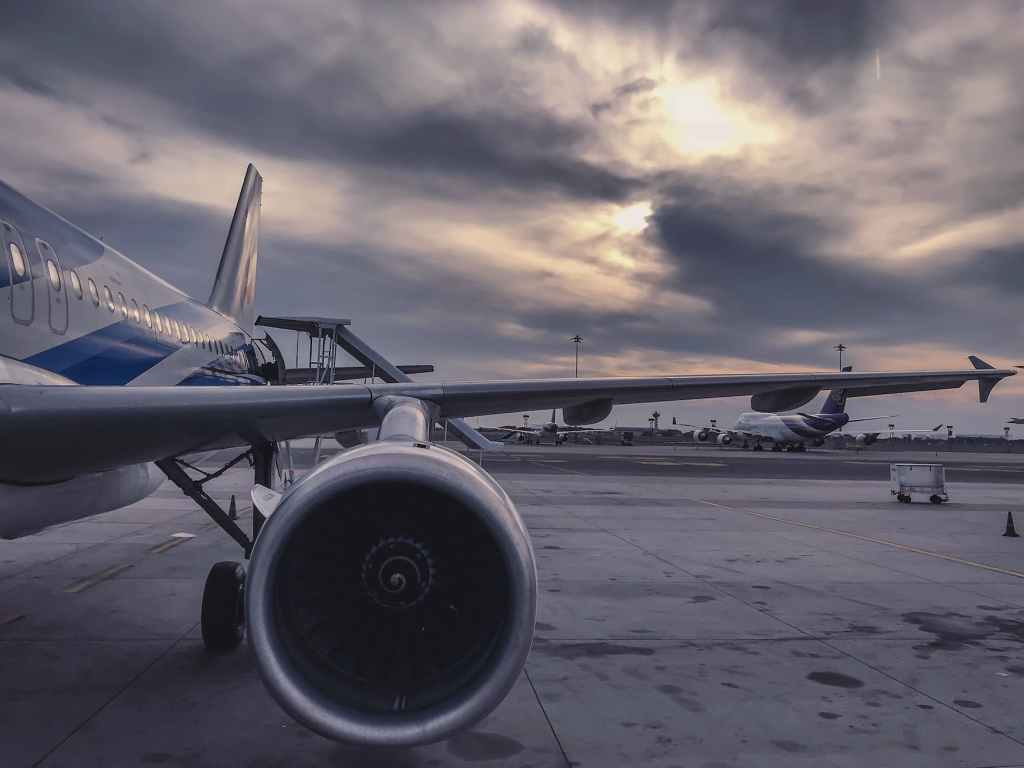
Nowadays, it’s common to sit down in a large twin-engined widebody aircraft, like a Boeing 787 or an Airbus A330, starting in Los Angeles and enjoy a quick, short flight to Tokyo or Sydney. Just a few years ago, these long haul flights over open ocean would have been flown by large, 4 engined aircraft like the Airbus A380, A340, or Boeing 747-400. But now, twin-engined airliners are the global standard, with many passenger carriers opting to remove 747s and A380s from passenger duties. And even still, more efficient small jets like the A320 neo or Boeing 737 MAX 10 reflect the aviation industry’s general trend towards medium capacity, high-effeceincy, point-to-point travel. So how did we get here?
The first long range passenger aircraft used piston engines which were notoriously unreliable. As aviation developed, and trans-oceanic flights increased in number, the Federal Aviation Administration (FAA) placed limits on the routes of flights: within 60 minutes of a diversion airport at all times. Because of this, early airliners had to fly circuitous routes to cross oceans, a long and inefficient process. As jet airliners became commonplace in the 1960s, 4 and even 3 engined jets eventually were exempted from the rule, and three-engined types like the Lockheed L-1011 and DC-10 began to rule long-haul flights.
By the late 1970s, widebody twin-jets like the Airbus A300 began to enter service. These twin-jets were required to be within 60 minutes of single engine flight time from an airport at all points in their route as an extention of the 60 minute rule. However the idea of ETOPS was that of the airlines. ETOPS stands for “Extended Range Twin Engine Operations Performance Standards.” It requires additional upgrades and certifications for the aircraft, airline, and crew, but allows twin-jets to fly further from alternate airports. For example, a widebody twin-jet flying a trans-atlantic route might save several thousand pounds of fuel per flight compared to a similarly sized tri-jet. The first ETOPS-120 increased the maximum distance to a diversion airfort to 120 minutes in 1985. Since then, ETOPS have been gradually expanded, with many aircraft certified for ETOPS-120 or 180, and the longest range ETOPS-370 (offered in the Airbus A350 XWB) able to cover over 99% Of the Earth’s surface.
In the last few decades, the advent of ultra-long-range twin engined widebody aircraft and expanding ETOPS has made air travel vastly more efficient and shifted the balance away from the tri and quad-jets of old.
 Hi-Tech hangar
Leave a comment